
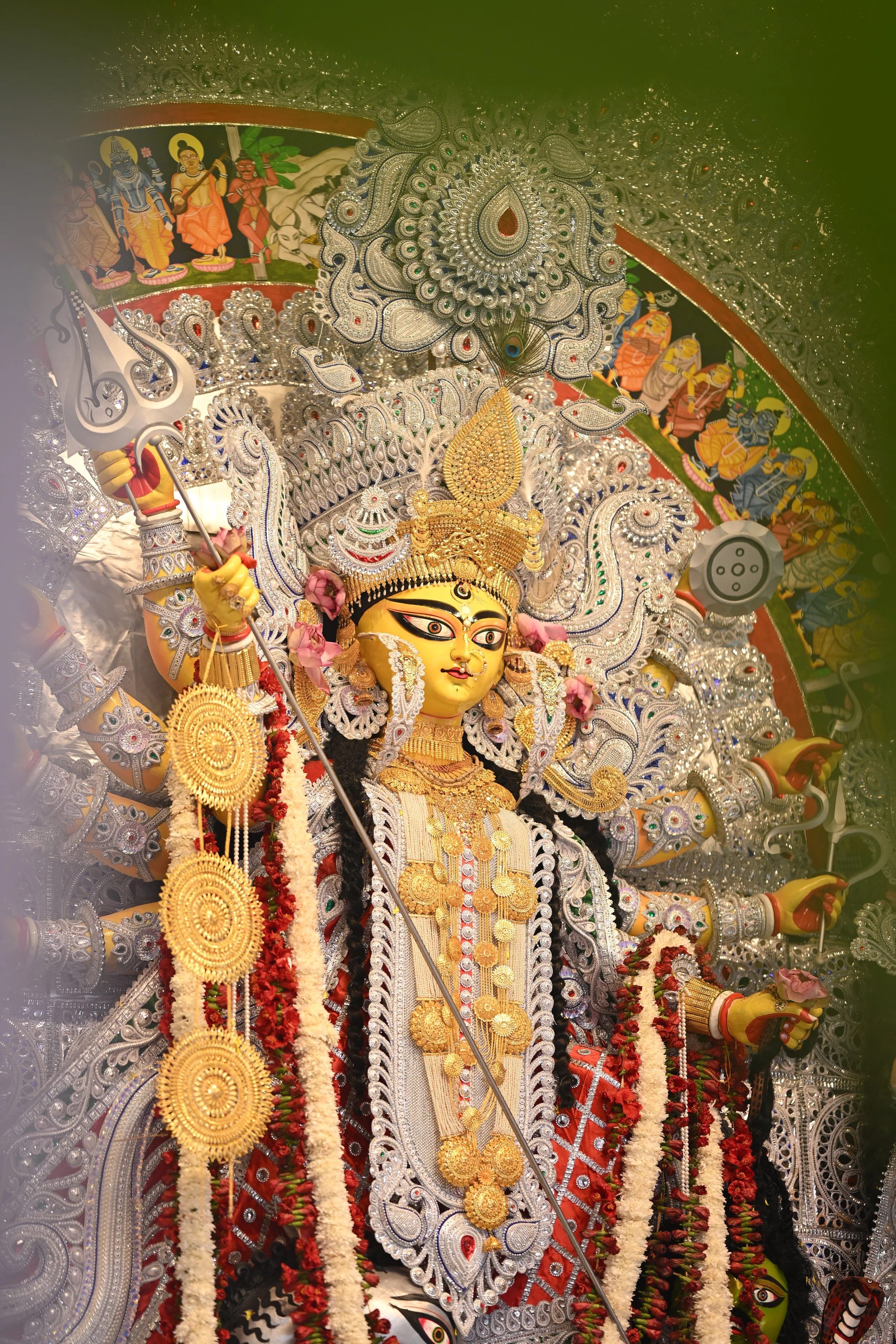
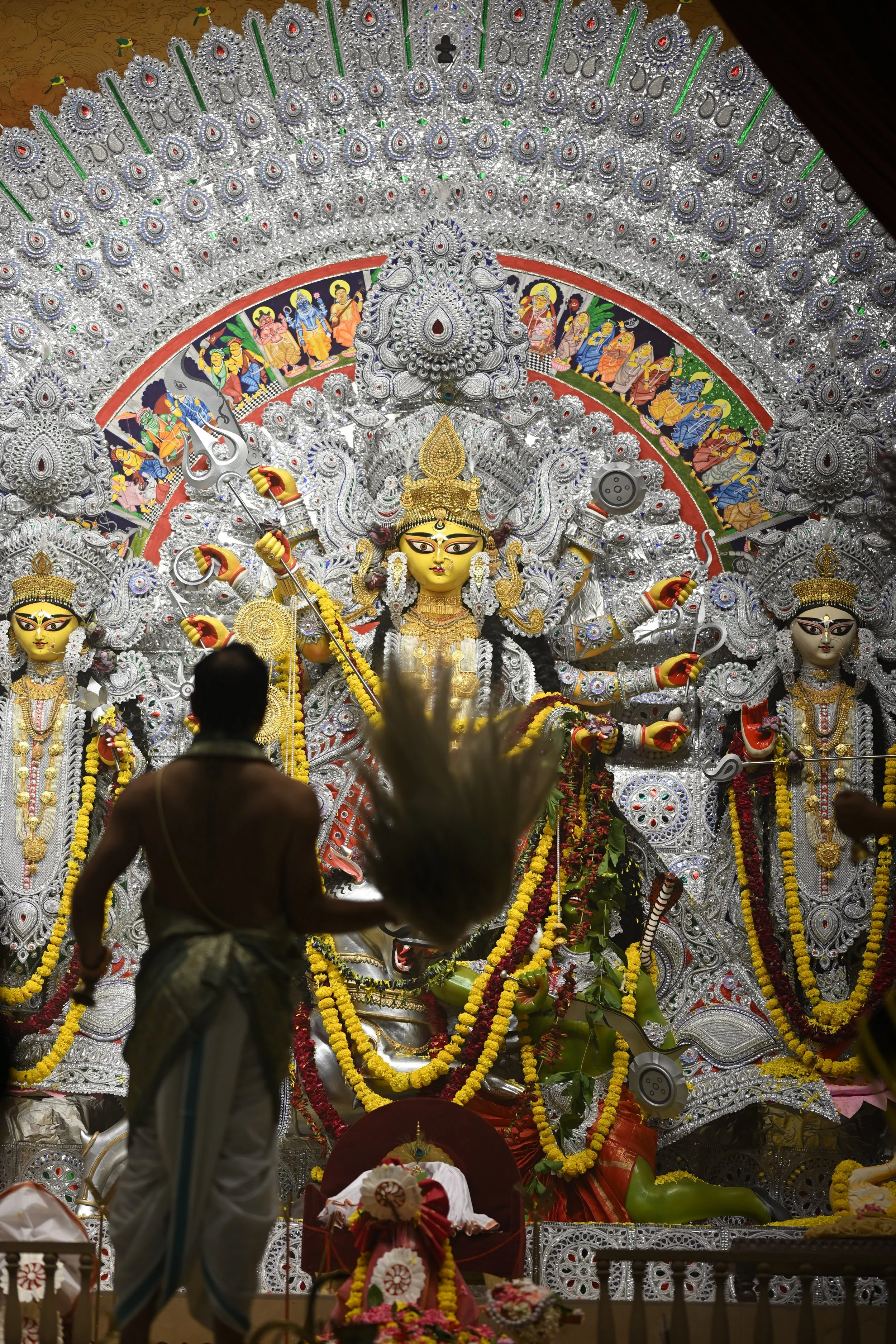
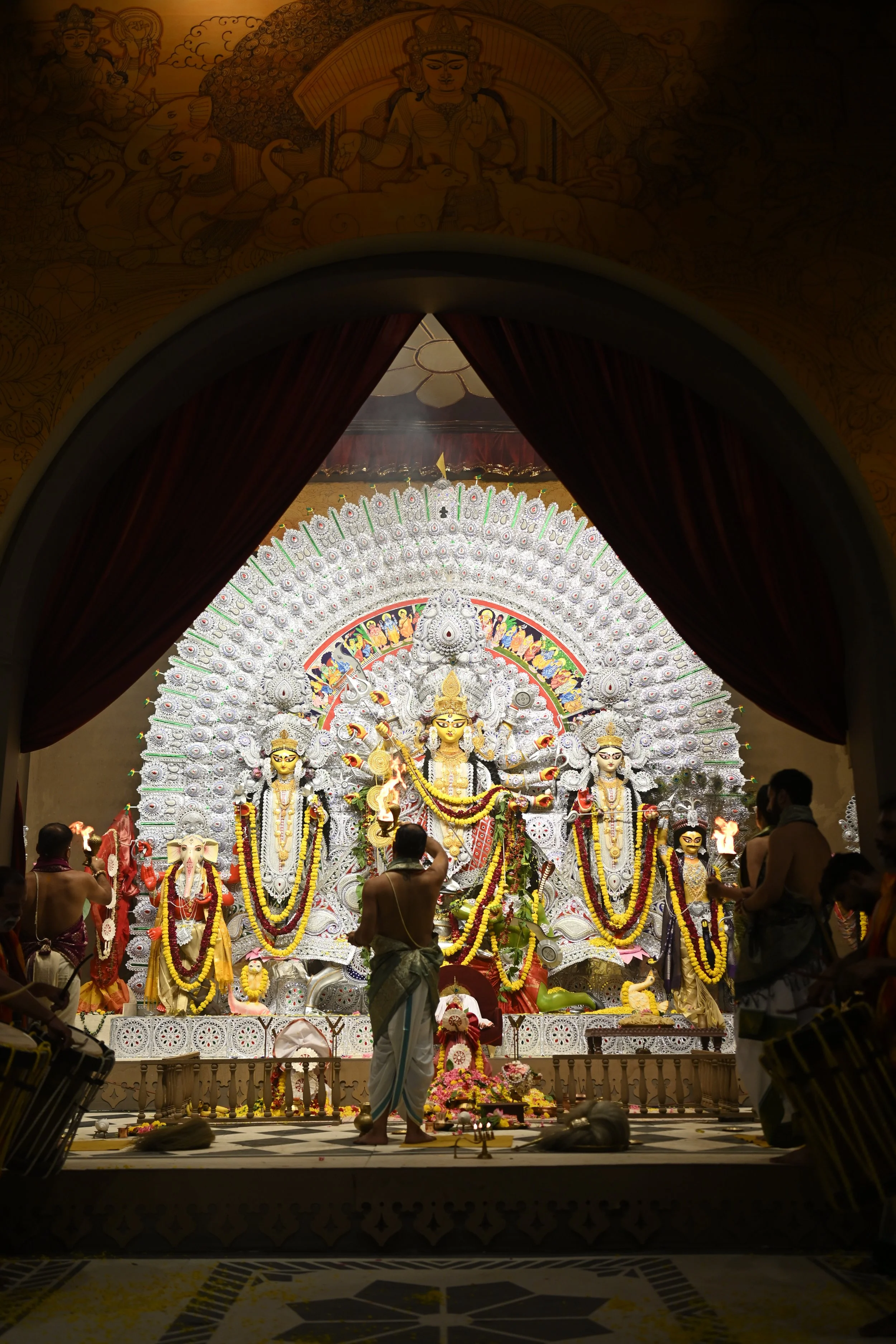
If you have ever stood inside a South Delhi Durga Puja pandal on Sasthi evening, you will recognise the sensory riot that defines Durgotsav Greater Kailash 2. The air is ninety per cent dhunuchi smoke, ten per cent sweet bhog-er khichuri, all soundtracked by the thunderous beats of the dhak and the high-decibel debates of aunties comparing Dhakai Jamdani sarees. Everyone is thirsty for cultural camaraderie, and frantically posing for the almighty Instagram feed.
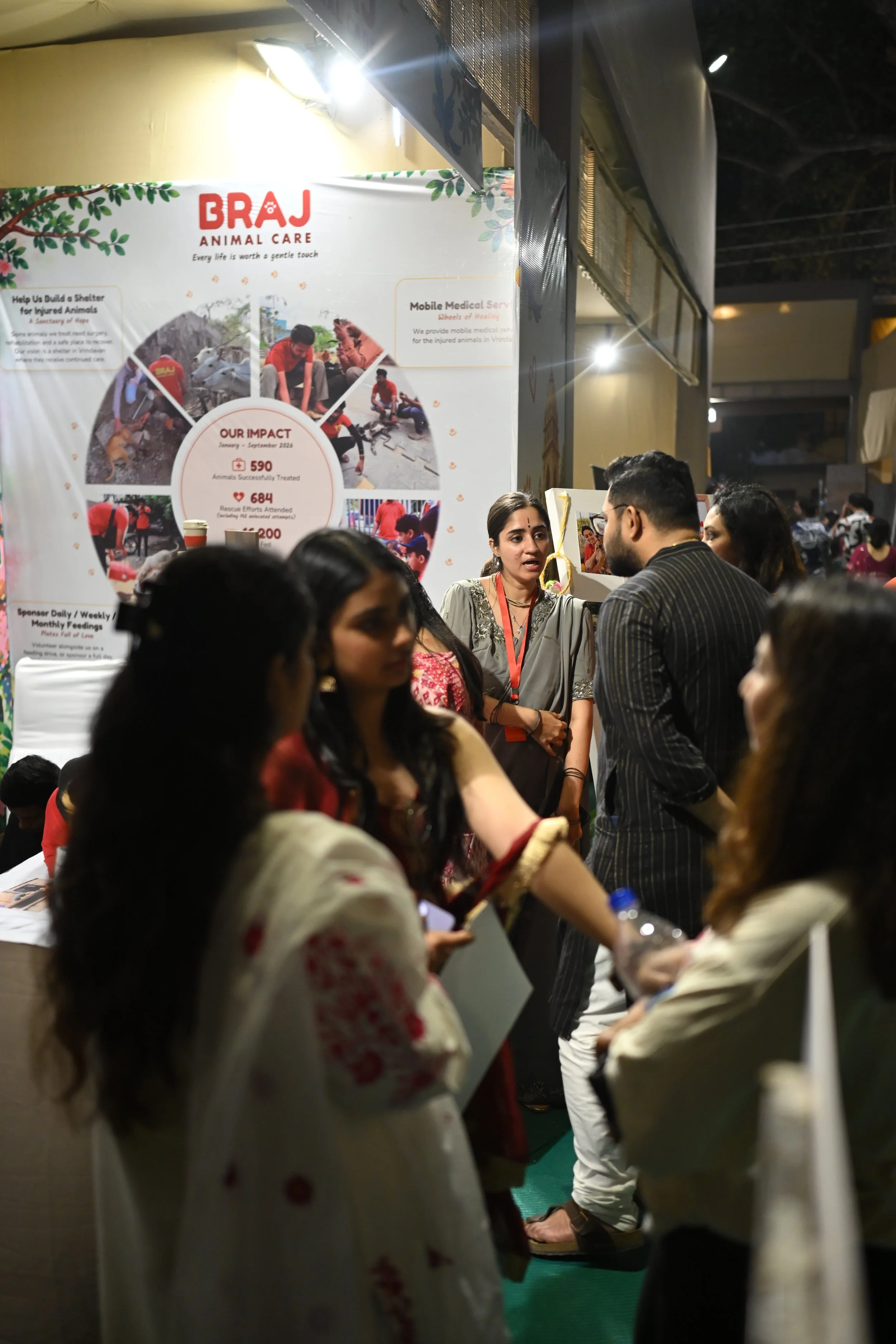
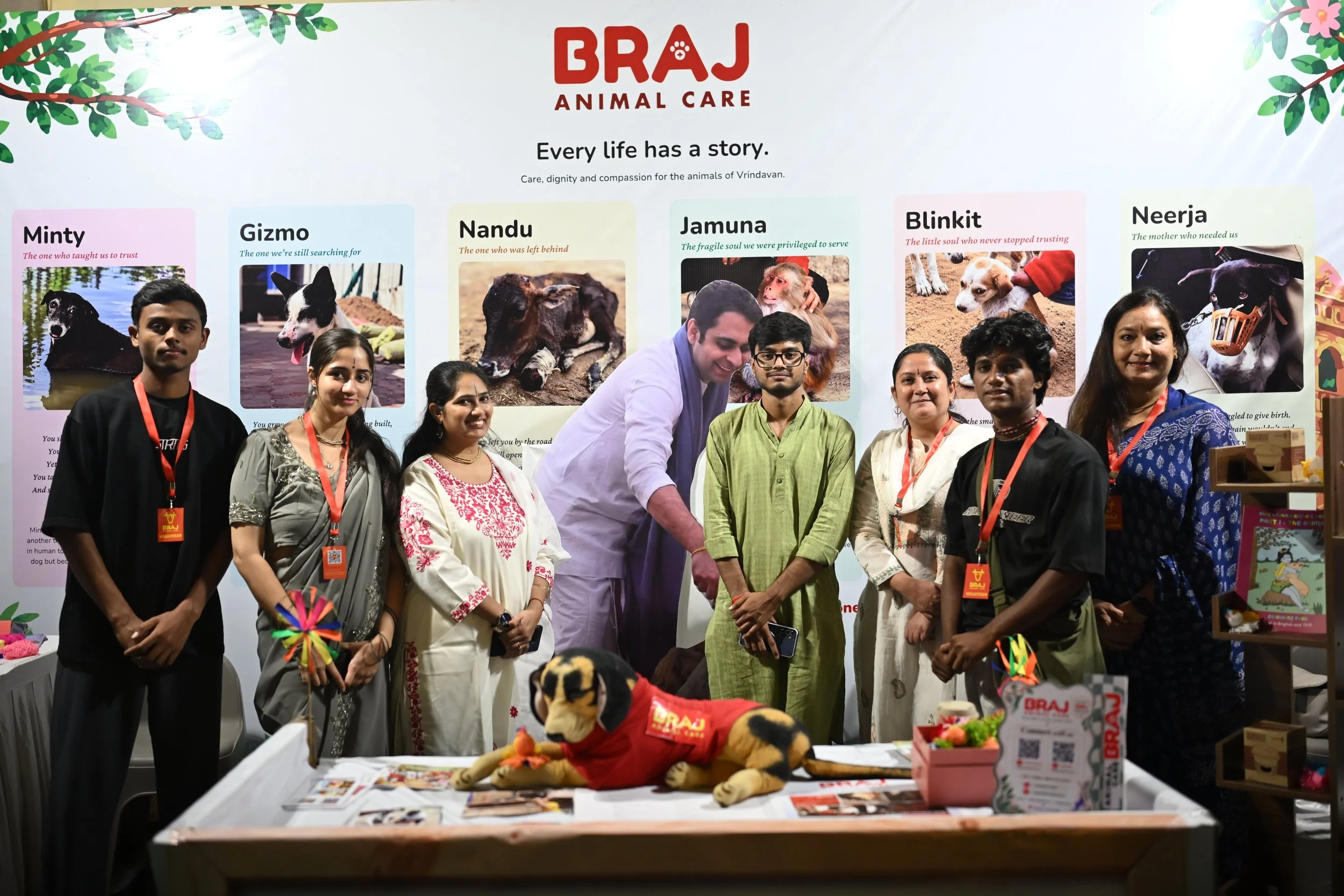
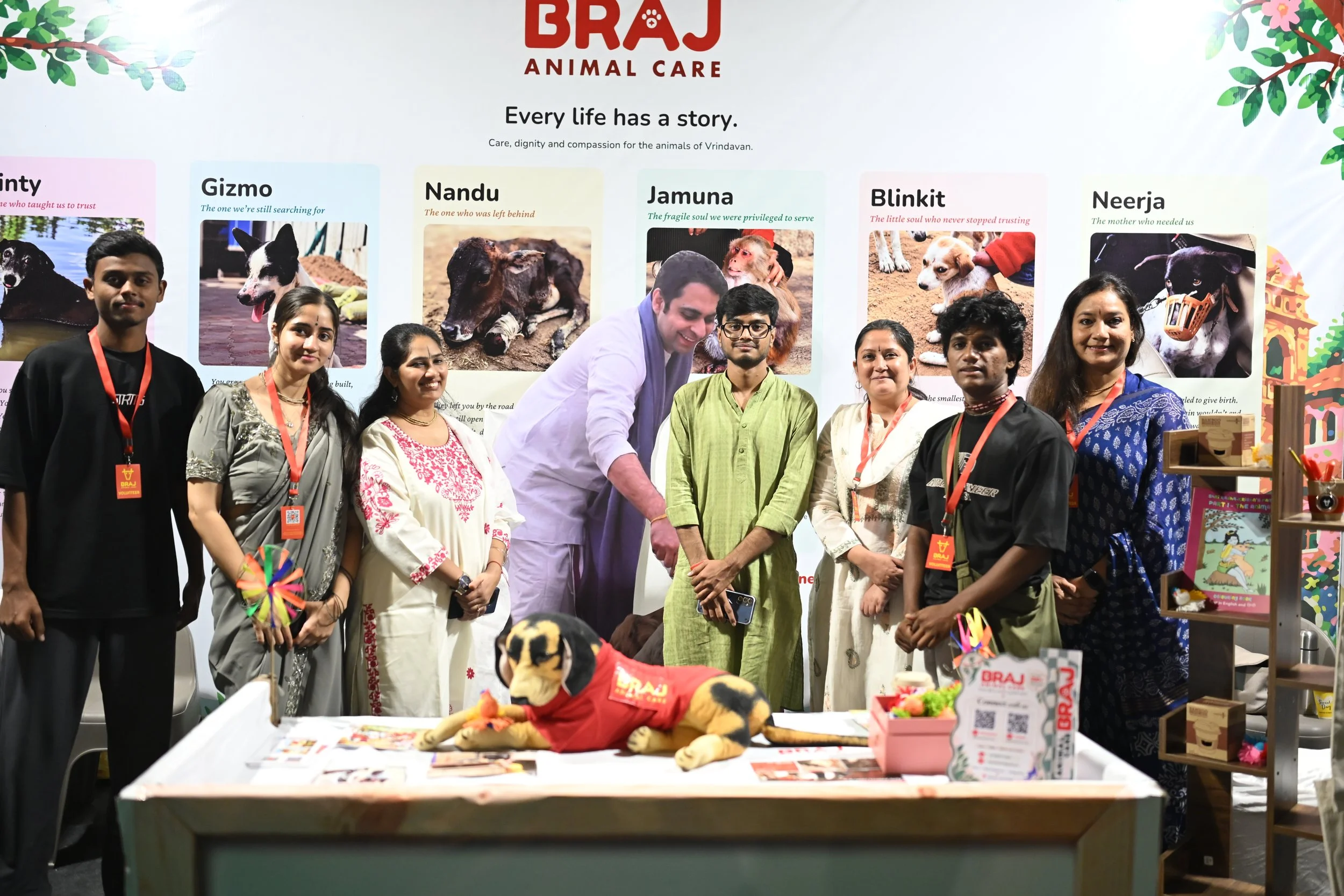
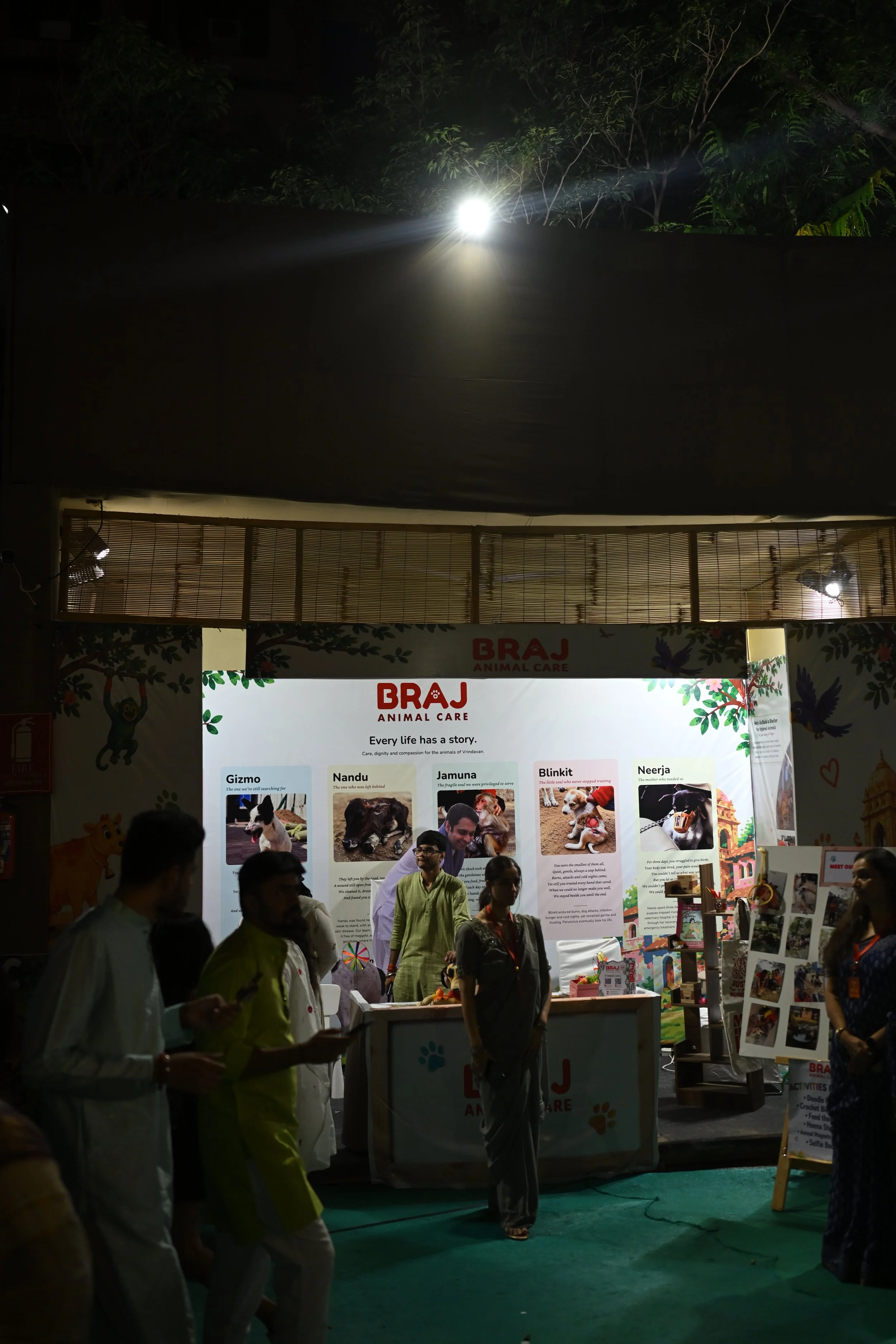
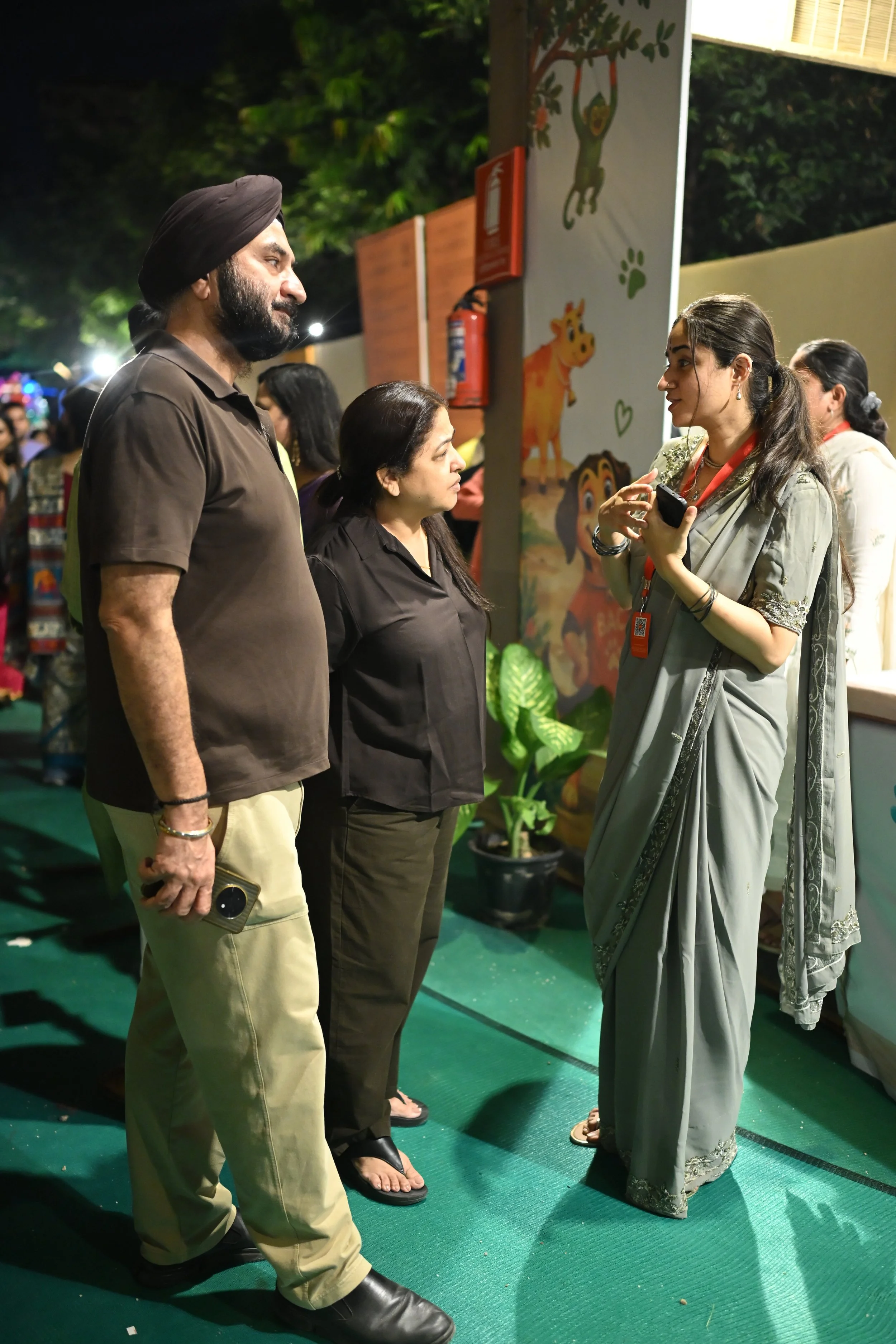
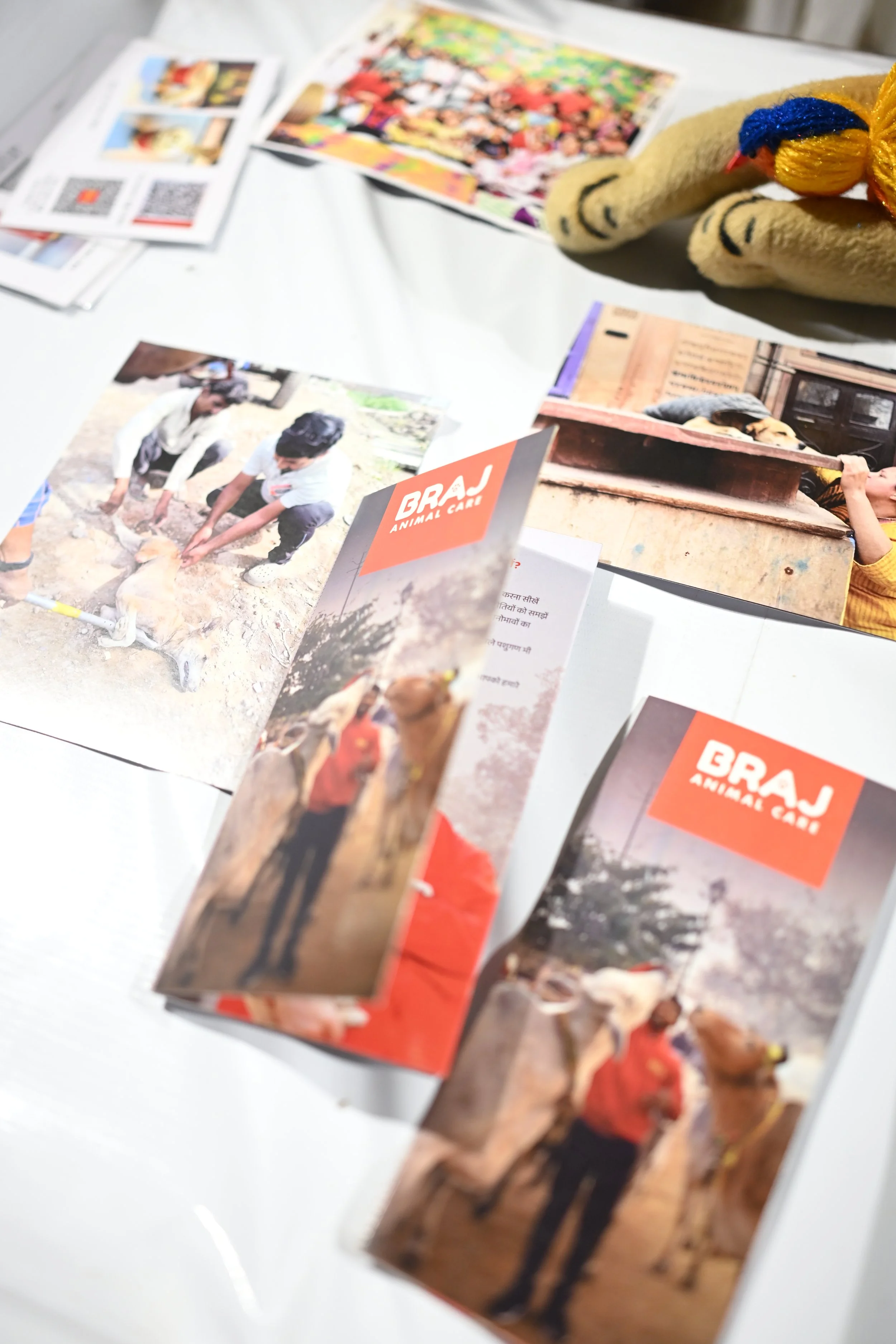
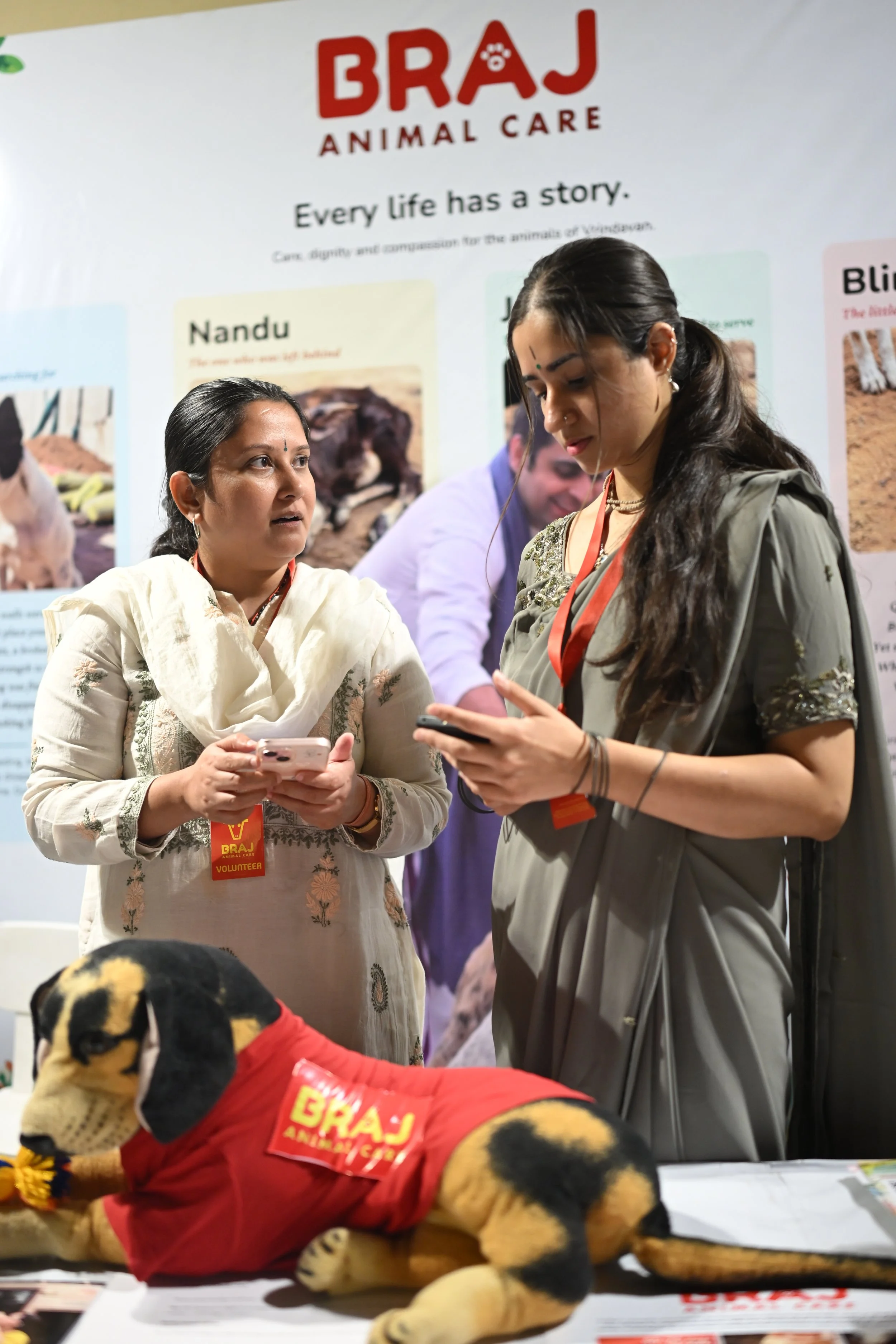
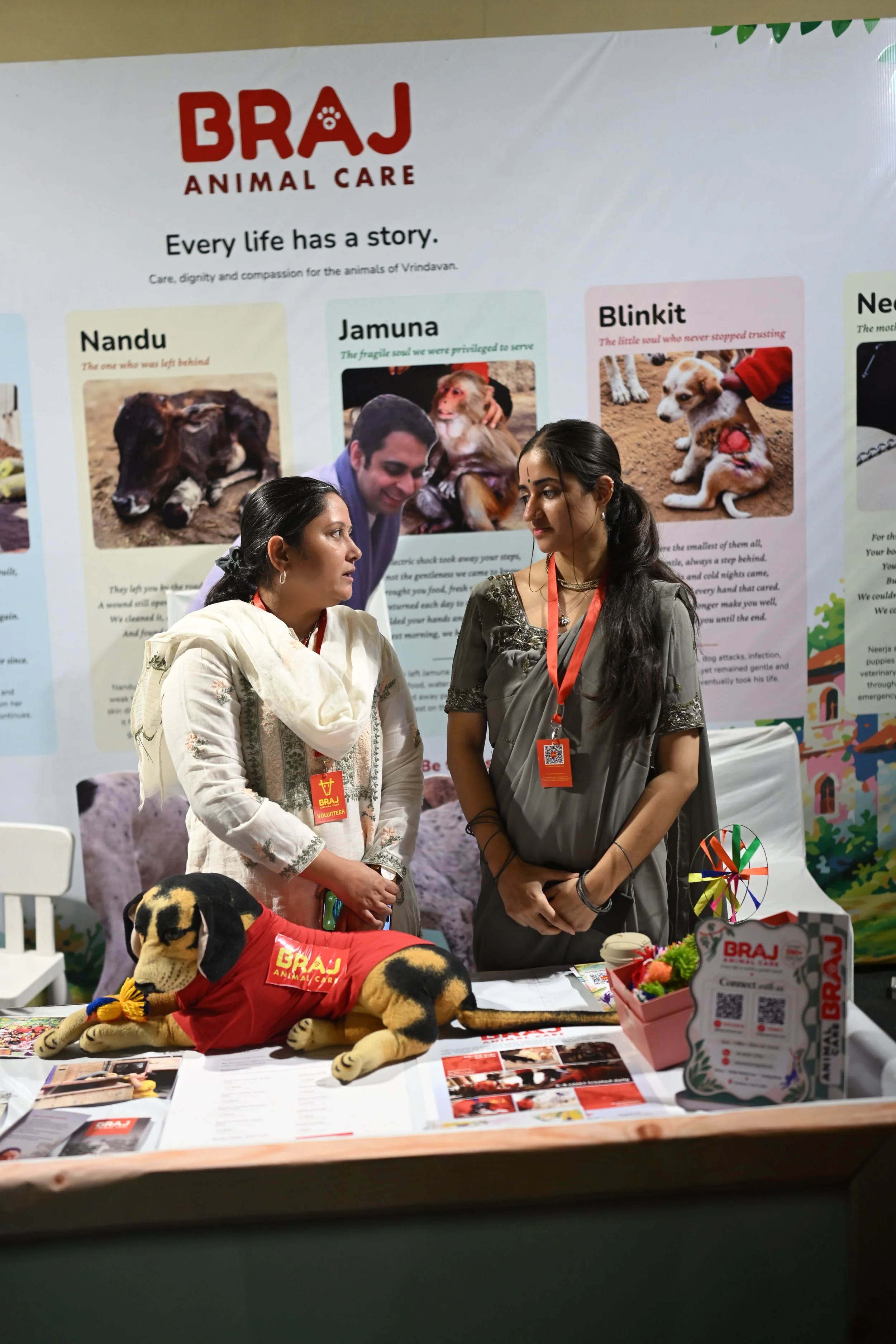
Into this exact whirlwind, from 15th to 20th October, a handful of us pitched a canopy. We were not selling trending jewellery, artisanal designer clothes, or festive confectioneries. We were Braj Animal Care (BAC), arriving straight from the sacred dust and alleys of Vrindavan, setting up camp in one of the capital's most affluent postcodes.
Our mission? Officially, it was an outreach stall. Unofficially, it was an experiment to see what happens when Braj love vibes infuse South Delhi’s finest.
Now, if you ask any seasoned event organiser how to persuade festive crowds to care about street dogs, ailing monkeys, and injured cows while their mouths are watering for steaming luchi-alur dom and piping-hot rolls, they will tell you it is impossible. People visit a pandal to celebrate, not to contemplate animal distress. Yet, we possessed a secret weapon: sheer, unvarnished ingenuity, and a ball game.
We introduced the "Feed the Cow" game. The mechanism was delightfully simple: an oversized, charmingly crafted wooden cow with an aperture where its mouth ought to be. One paid a modest sum, stepped back a few paces, and attempted to lob plush balls into the cutout. The twist was the magic part: for every ball that found its mark, a living, breathing cow back in Vrindavan was fed fresh green fodder that very day.
Almost immediately, competitive fathers turned into seasoned fast bowlers. Seven-year-olds hurled balls with the intensity of the Olympic champion, Neeraj Chopra, yelling, “Look, Mumma, I just fed lunch to a cow in Vrindavan!” Toddlers missed by a mile, giggled uncontrollably, and demanded another turn. Behind every chuckle, a rescued calf miles away was happily munching on fresh green chara.
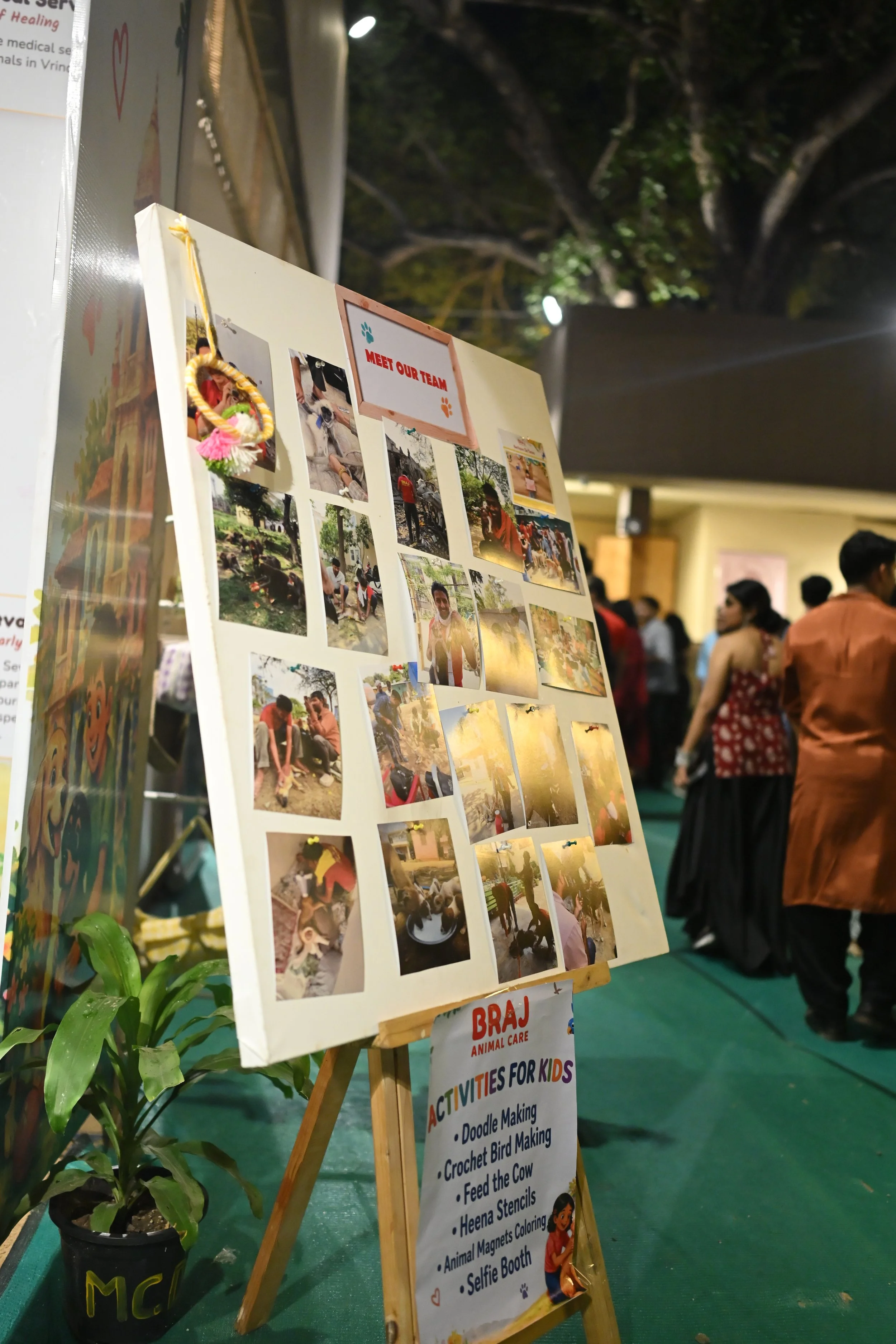
Our doodle booth, wool bird-making counter, and hand-drawn henna tattoo station became a glorious riot of colour. We set up our small corner of the pandal, assuming it would keep hyperactive children occupied while their exhausted parents caught their breath.
We could not have been more mistaken.
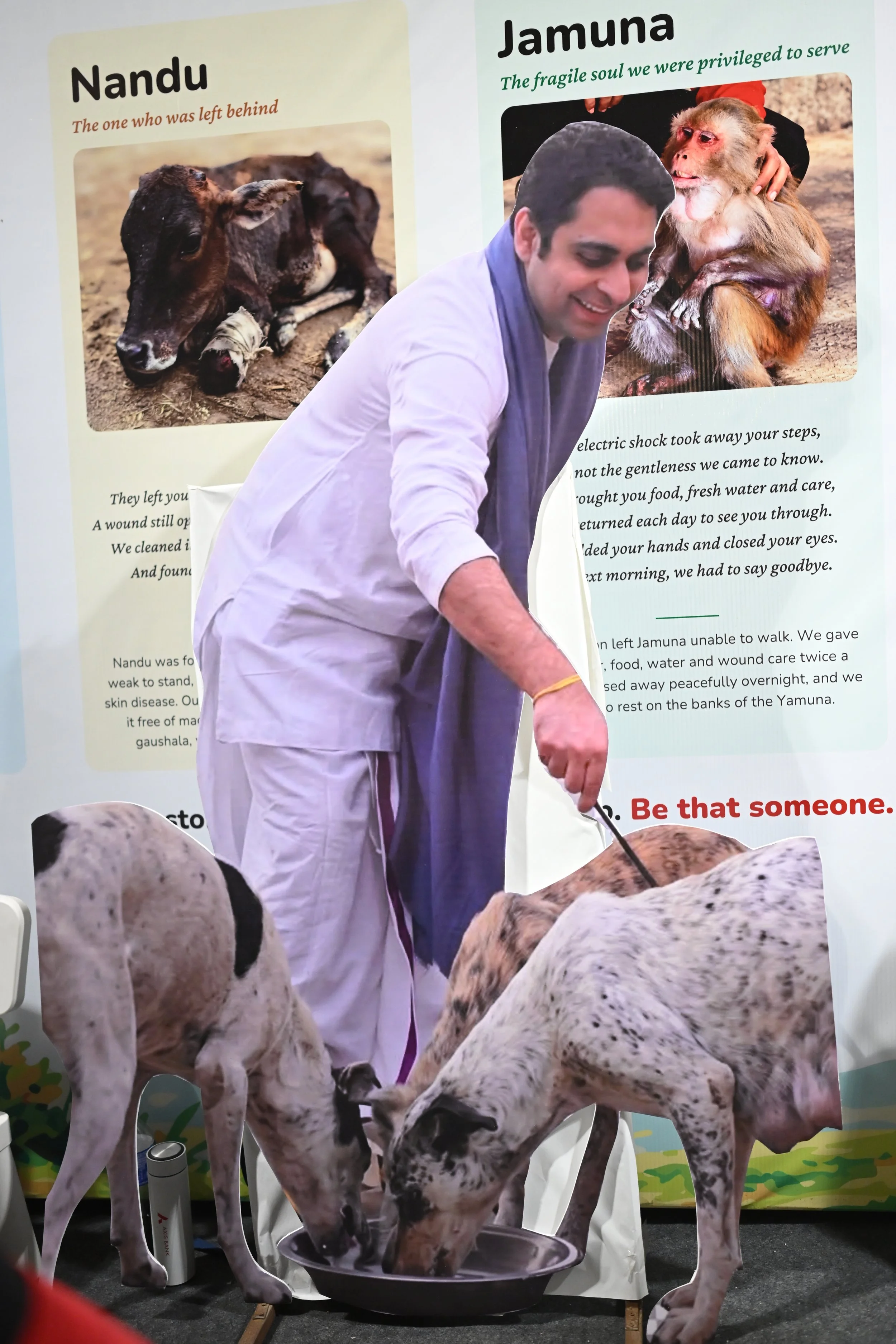
The genuine comedy unfolded at our photo booth. We had spent hours fashioning a playful, cartoonish animal backdrop intended strictly for the little ones. Instead, two entirely unexpected demographics thoroughly appreciated it: enthusiastic parents discovering their inner influencers, and swarms of Gen-Z teenagers. Draped in traditional silk kurtas and aesthetic sarees, the teenagers queued up with devotion, striking ironic peace signs and dramatic poses to ensure their "Pujo Dump ‘26" featured a picture alongside our Dogesh bhai. We welcomed it wholeheartedly; while they posed for their feeds, they read our boards.
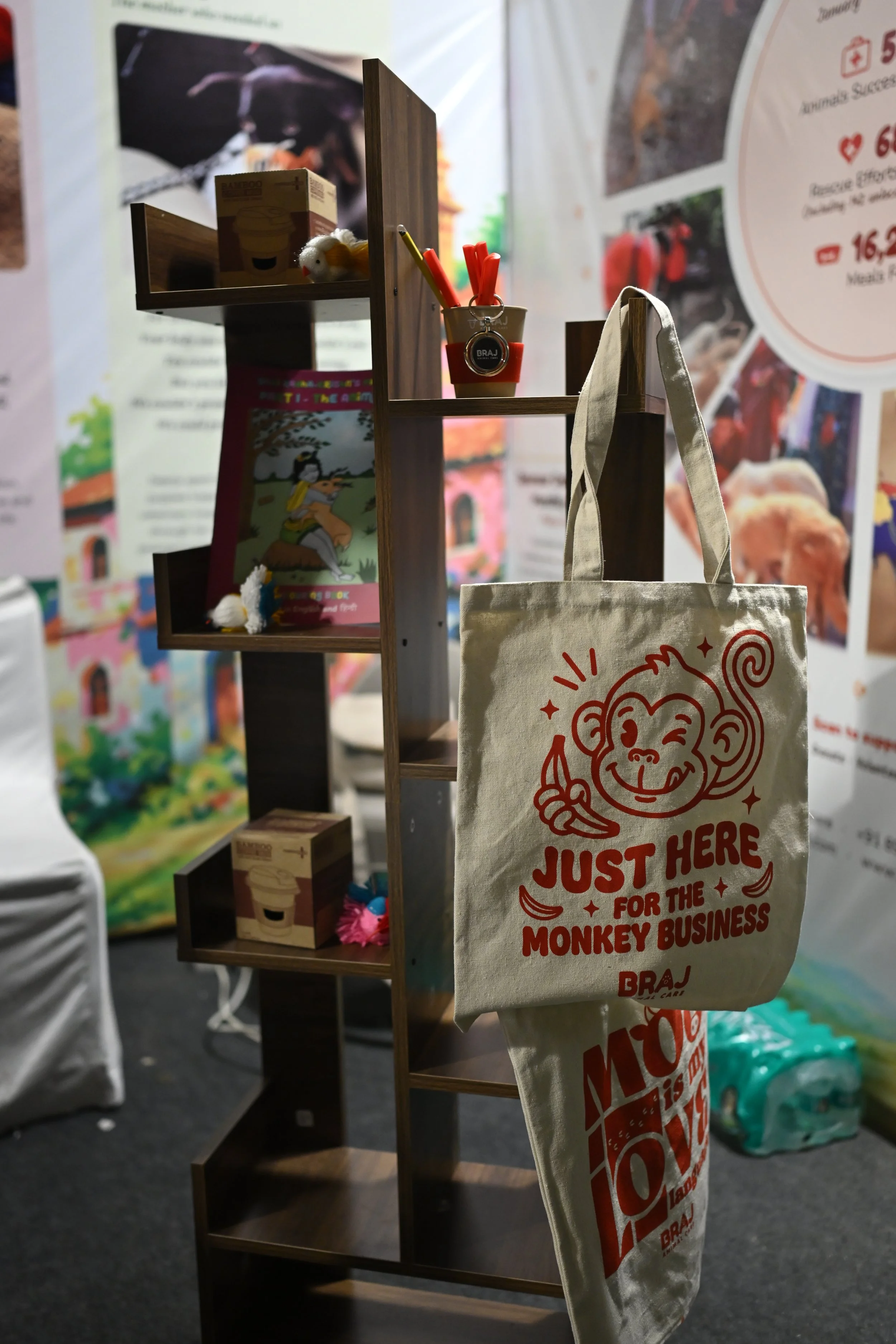
Then came the merchandise table. Our canvas tote bags, adorned with quirky, soulful animal illustrations, became the accidental hot ticket. You have seen true triumph until you see a sophisticated South Delhi shopper abruptly leave a high-end designer stall to admire a Braj Animal Care tote bag, beaming at the realisation that every rupee went straight into the medicine box for an injured street animal.
Yet, amid the games and the coveted tote bags, the undisputed, show-stealing hero of the entire six-day event was an unlikely legend: a little rescue puppy named Blinkit.
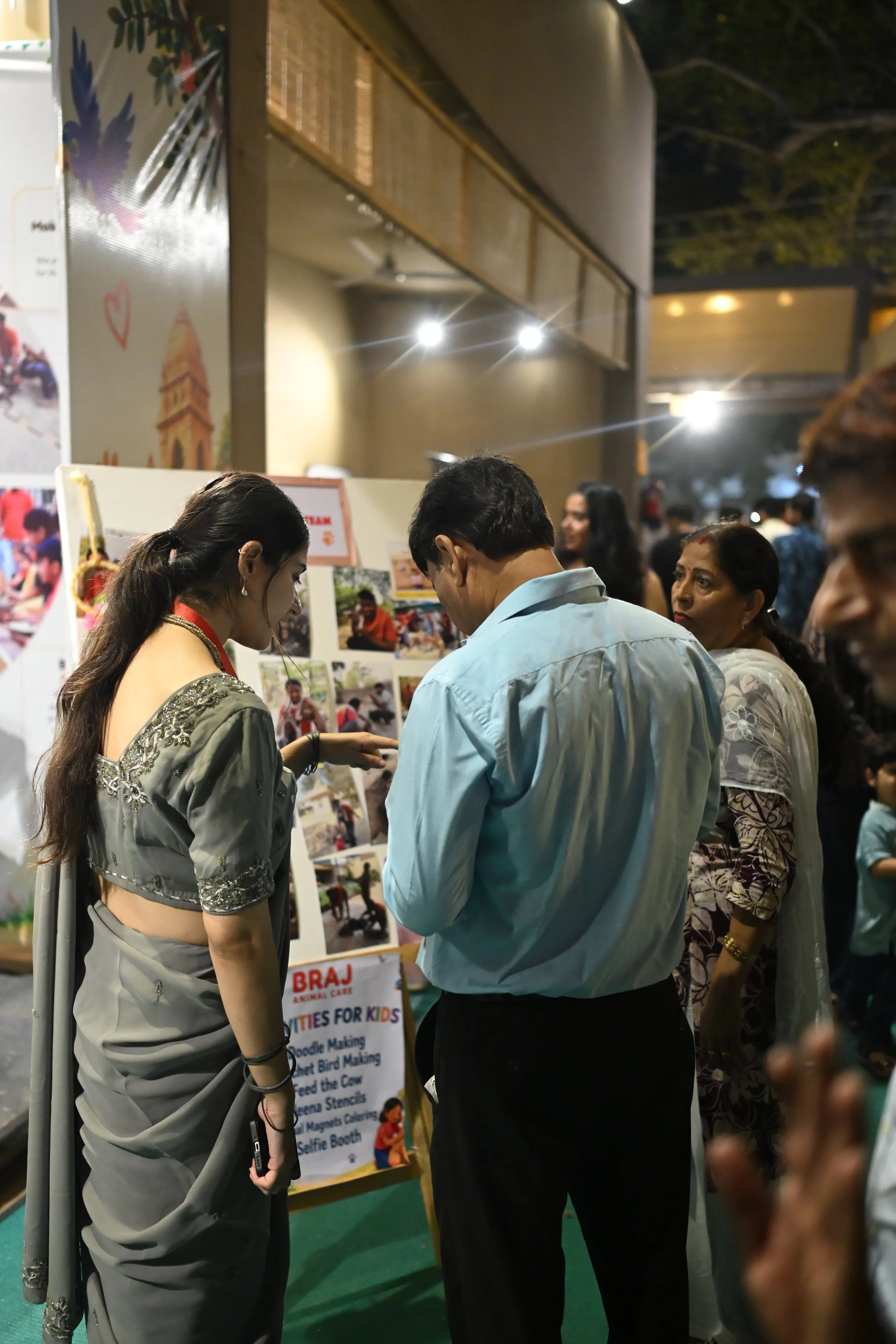
Of all our rescue photo displays, Blinkit’s story board set the crowd alight. In a city where almost every household relies on ten-minute grocery apps for emergency coriander or late-night snacks, the name was pure lightning. Even passers-by with no prior intention of visiting our stall, strolling towards the pandal, would suddenly halt in their tracks, nudge their companions, and exclaim wide-eyed: “Arre look! Look at that board, they have a puppy named Blinkit!”
That delightfully quirky name became our finest bridge. People drew nearer simply to chuckle, only to stay and absorb his bittersweet journey: how BAC had found him, the round-the-clock intensive care, and how fiercely the team had fought for his fragile life. For a tiny soul who had known only cruelty and pain on the street, Blinkit was now halting hundreds in their tracks, transforming an everyday punchline into a moment of profound reflection.
Visitors lingered, their curiosity piqued, asking with genuine bewilderment: “Wait… you are based in Vrindavan? Why on earth have you set up a stall here in GK-2?”
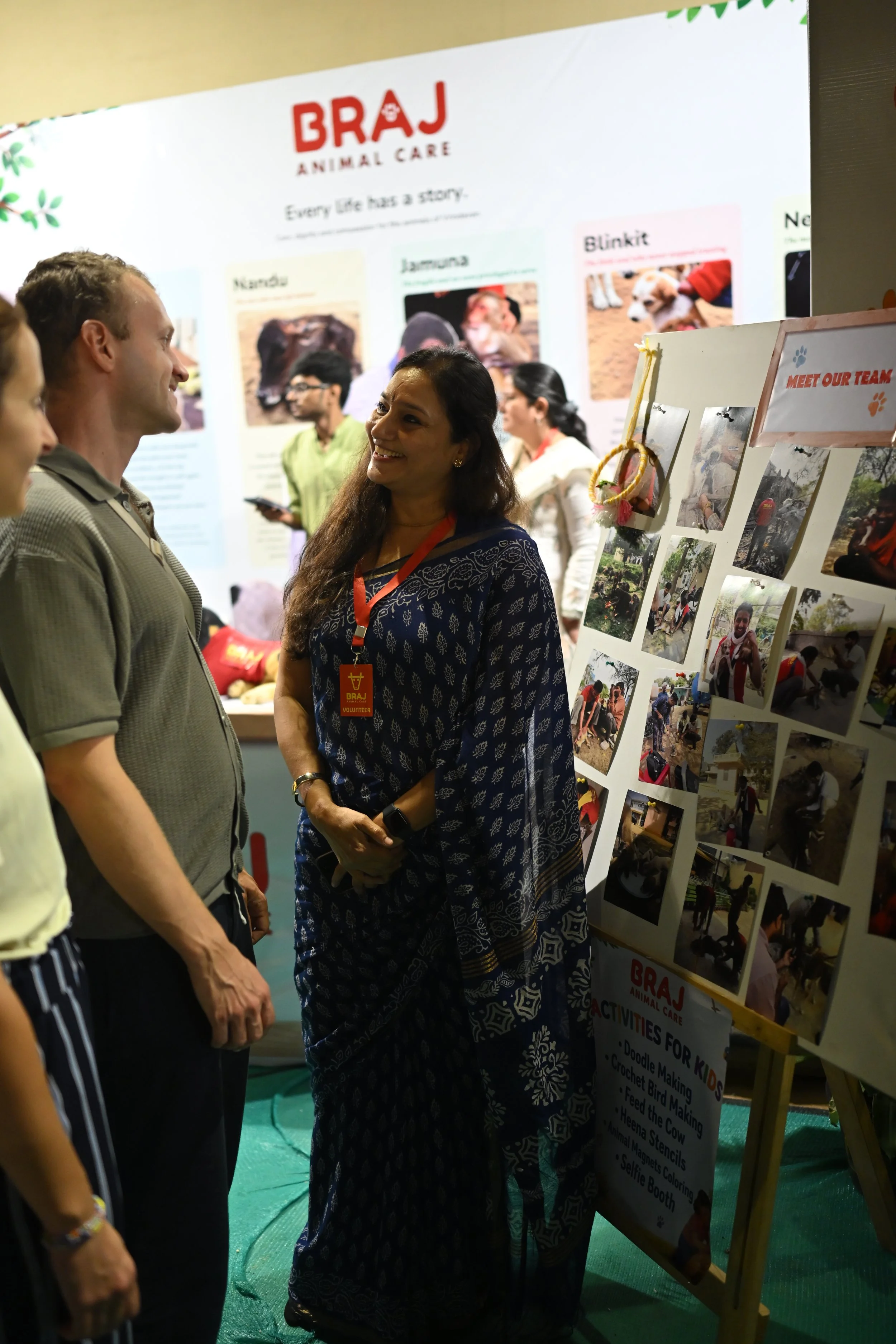
We smiled and offered the simple truth. We had not journeyed to the capital to peddle commercial goods or set up an adoption agency. We were there to remind people that these lives exist. We shared the raw realities: the electrocuted monkeys, the elderly bulls nursed back to health, the injured dogs bandaged in the dead of night. We spoke of the fragile web of our ecosystem, illustrating how modern cities, despite their flyovers and luxury cars, ultimately choke when they forget how to coexist with the non-human lives around them.
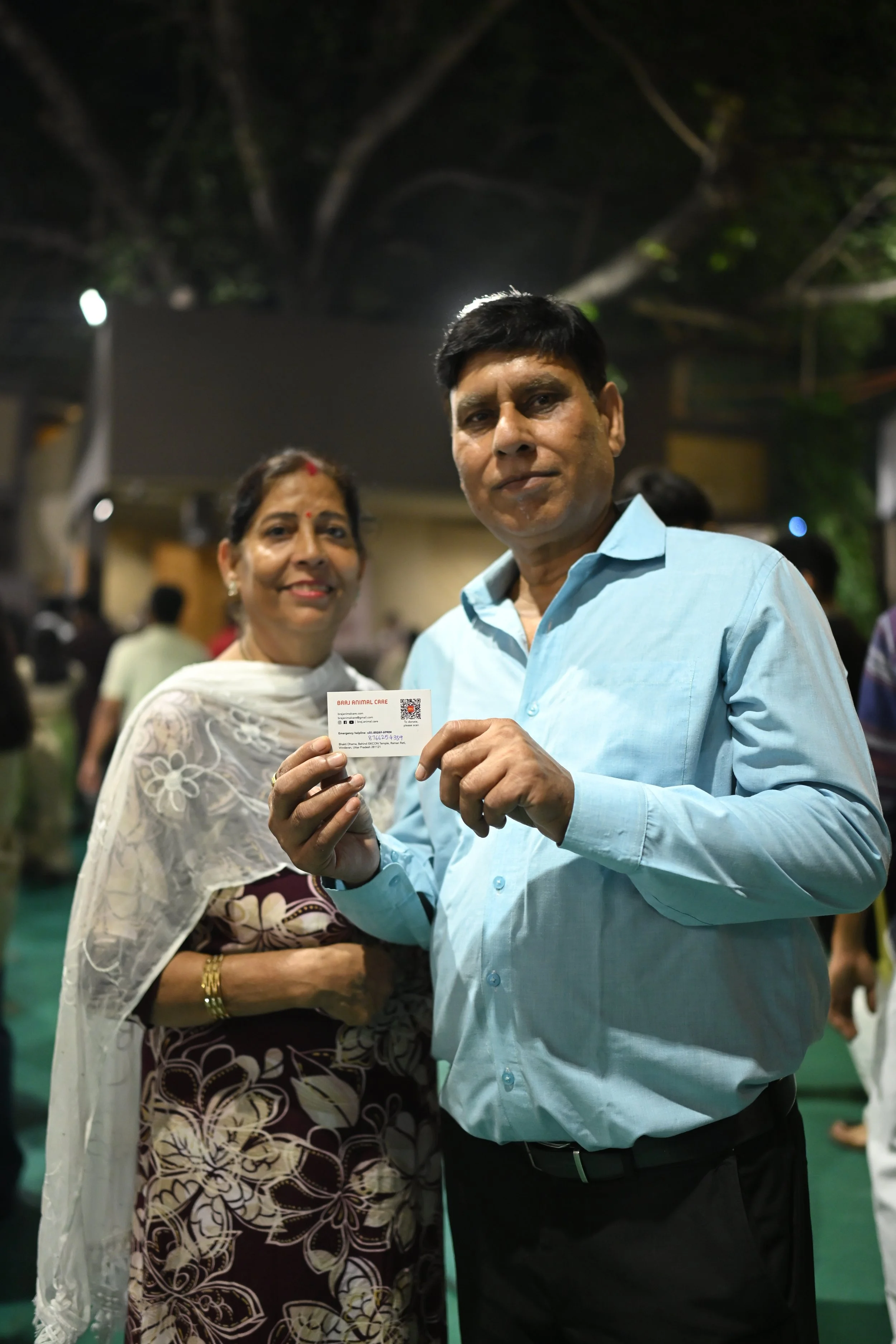
The atmosphere shifted palpably. Light-hearted banter gave way to quiet, earnest listening. We watched bustling urbanites swallow hard, their eyes welling up over the rescue photographs. Several immediately opened their wallets to donate for these Brajwasis. Others lingered for half an hour, opening their hearts to share tales of the community streeties they care for in their own colonies, bonding over the bittersweet joy of being an animal lover in a world that so frequently turns a blind eye.
Then came the inevitable question, delivered half-wistfully, half in earnest: “You are doing incredible work in Vrindavan… but tell us, when are you coming to Delhi? We need you here so badly!”
We laughed, yet the sentiment resonated deeply. Compassion is universal; sometimes people merely require a gentle, genuine reminder to reawaken it.
Beneath the bustling hours, the hoarse voices from fielding inquiries, and the endless packing of merchandise, our team ran on a different kind of fuel. For every single volunteer standing behind that counter, this was never an ordinary NGO outreach assignment. It was something infinitely deeper, something sacred.
In our hearts, every injured dog, every electrocuted monkey, and every cow roaming the lanes of Vrindavan is not a stray or a municipal burden. They are the beloved Brajwasis. They belong to the sacred Dham. Standing beneath the bright lights of Durgotsav Greater Kailash 2, speaking up for these voiceless souls was never mere public relations. You can stand for ten hours straight when you know you are speaking on behalf of these loving Brajwasis.
We left hundreds of people with a permanent, standing invitation: “Whenever your heart draws you to Vrindavan, do not stop at temple visits alone. Contact us. Step onto our feeding vehicles. Walk the alleyways with our team, and feed a Brajwasi with your own hands.”
Durga Puja celebrates the triumph of love, divine strength, and life over darkness. Standing in GK-2, we learned that devotion is not confined to hymns recited before an altar. Sometimes, it is found in tossing a ball into a painted cow’s mouth, remembering the brave spirit of a tiny pup named Blinkit who fought until the very end. It is found in choosing to care for those who suffer but cannot ask for help.